
A defiant riposte to his advancing years, Brahms’ Fourth Symphony is a powerful piece which reveals a composer at the top of his game.
Read on to find out more about this compelling work from one of classical music’s greats.
Featured in concert at Huddersfield Town Hall on Thursday 23 April conducted by Opera North Music Director, Garry Walker
Book now
What’s the music like?
Lydia Dobson who plays cello in the Orchestra of Opera North describes what to expect:
“Out of the four Brahms symphonies, the last is my personal favourite. This late symphonic work is a marvel in profound emotion and expression.
“From the outset, its restless, sighing motif sets a tone of introspection, serenity and quiet intensity. It initially appears deceptively simple, before unfolding into the rich, colourful sound world that is unmistakably characteristic of Brahms’ musical identity. Brahms had quite a unique approach with this first movement. Despite it being in Sonata form, which is a musical structure favoured by contemporaries, Brahms discards some of the typical features, making a conscious choice not to repeat the exposition and instead focuses on the development of the thematic material.
“The symphony balances lyrical beauty with underlying tension, culminating in a powerful final movement built on a passacaglia, from which Brahms transforms the ideas into something both monumental and deeply moving. Blending classical discipline with Romantic expressiveness, the Fourth Symphony stands as a profound meditation on fate, loss, and resilience.”
Listen to the music
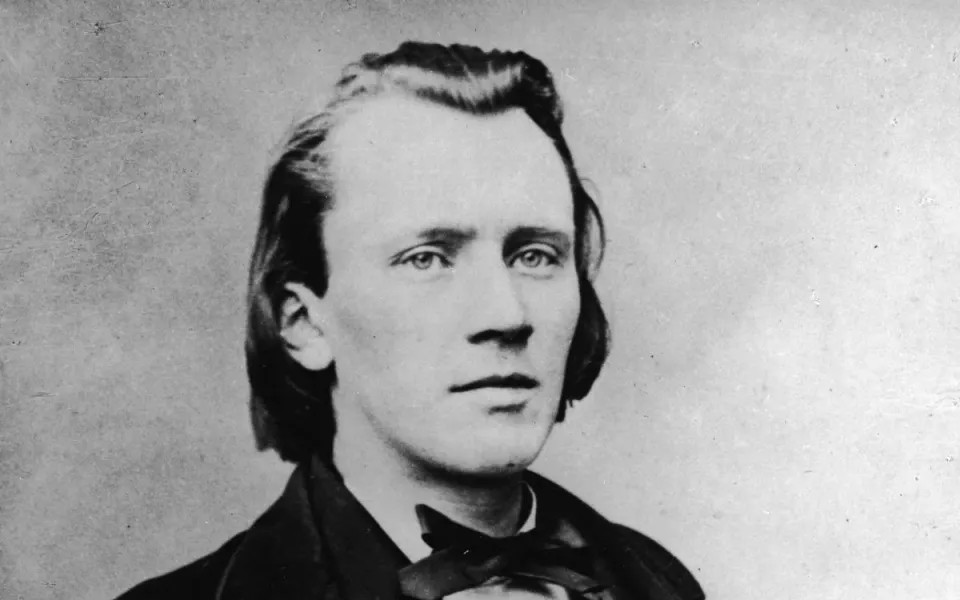
Johannes Brahms as a young man
Who was the composer?
Born on 7 May 1833 in Hamburg, Johannes Brahms was born into poverty and started playing piano in dance halls at a very early age to help boost the family’s income. In doing so, he was following in the footsteps of his father Jakob, a jobbing musician who entertained people by playing double bass and French horn – later earning a place in the Hamburg Philharmonic. As a talented pianist gifted with perfect pitch, his son was destined for greater things, however.
During Brahms’ rise to the top, two meetings proved particularly influential. When he was 17, the young composer met Eduard Reményi, a Hungarian refugee and violinist who introduced him to the world of folk and gypsy music, which proved a major influence on his work. Brahms also became close to both Robert and Clara Schumann. This was a friendship that lasted a lifetime, with Brahms providing emotional support – and possibly more – to Clara when she became a widow following the older composer’s death in 1856.
While Brahms began composing his first symphony in 1854, it was over 20 years before he felt ready to premiere the piece in November 1876. He subsequently completed three further symphonies, as well as a number of concertos, chamber music, song arrangements, a Requiem and more, before passing away on 3 April 1897 in Vienna.
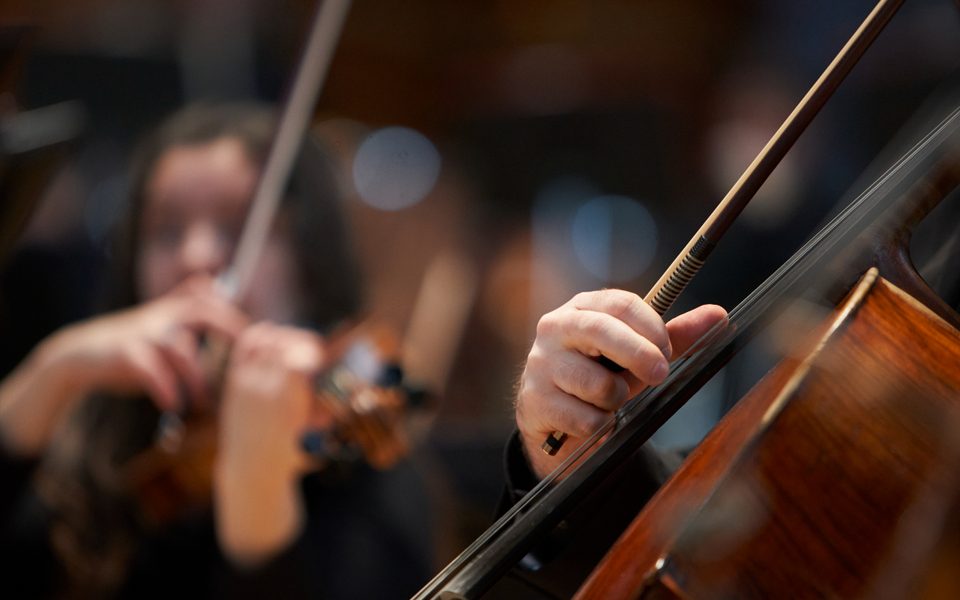
The strings of the Orchestra of Opera North. Photography by Justin Slee
When was the Fourth Symphony written?
Brahms wrote the Fourth Symphony during an intensely creative period in the 1880s. After it received a less than enthusiastic response from a select group of invited guests in 1885, it almost never saw the light of day. Luckily for posterity, Brahms still went ahead with the planned premiere in Meiningen later that year where it received a much warmer reception. Audiences were increasingly won over by the work’s power, leading to its position as a much-loved staple on the concert stage today.
As it turned out, this was the last symphony the composer wrote and stands as a fitting testament to both Brahms the man and the power of music in dark, unsettling times.

Music Director Garry Walker. Photography by Justin Slee
Did you know?
— As a young man, Brahms fell asleep during Liszt’s performance of his Sonata in B Minor at the Court of Weimar, not exactly endearing himself to the older composer.
— A great walker, Brahms could often be found striding in the Italian hills between concert tours.
— Brahms did become engaged to a young singer, Agathe von Siebold, but never actually married.
The Orchestra of Opera North perform Brahms’ Fourth Symphony with Garry Walker conducting at Huddersfield Town Hall as part of the Kirklees Concert Season on Thursday 23 April. The programme also features Thomas Adés and Rachmaninov, with Alexander Gavrylyuk on piano.
Book now

