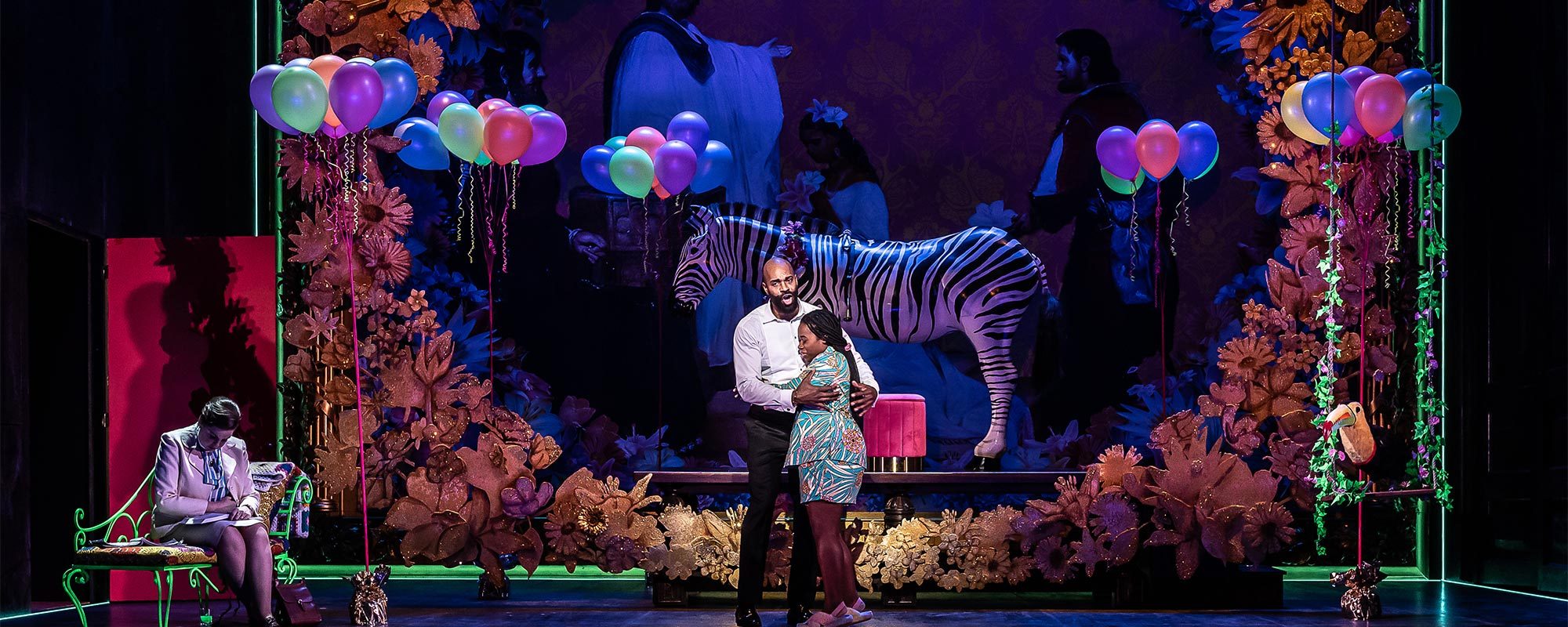
Having studied at Bretton Hall, University of Leeds, theatre director Femi Elufowoju jr is no stranger to Yorkshire where his new production of Verdi’s Rigoletto premiered in 2022 and where it returns for a second outing this autumn.
Book now
When the opera opened in Leeds four years ago, it celebrated a duo of firsts: it was the first time Femi had directed an opera (he is recognised as the first Black director to stage an opera at a major national opera house in the UK) and the first time Rigoletto had been explored through the lens of Black experience in this country.
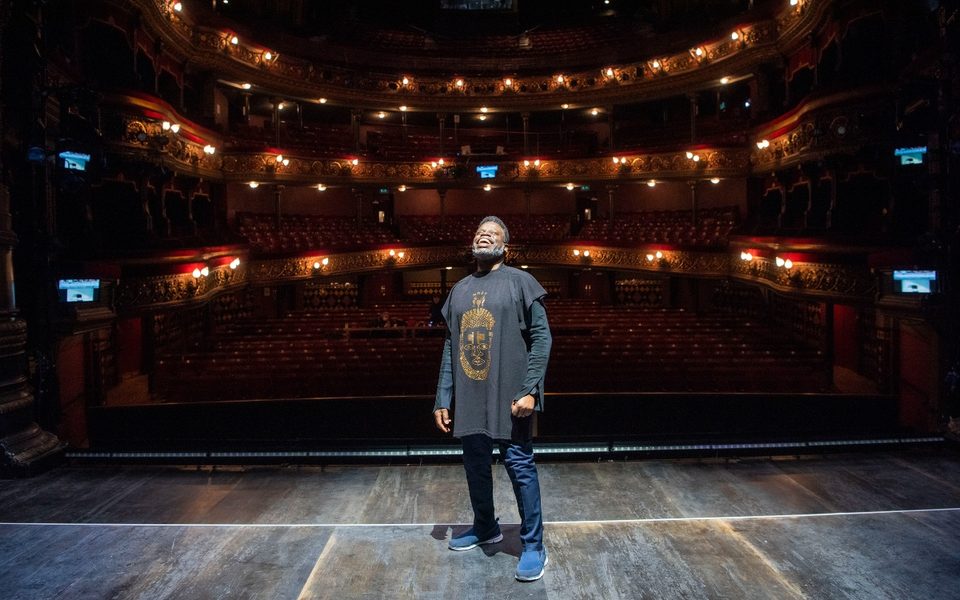
Femi Elufowoju jr, director of Rigoletto. Photography by Samantha Toolsie
It was during his training at Bretton Hall that Femi first encountered Verdi’s work: ‘The opera was Il trovatore, with the late great Keith Latham as the Count di Luna to Wilhelminia Fernandez’s young and absolutely unforgettable Leonora. Then La traviata, followed by Rigoletto – all three here in Leeds between the start and end of my training.’ The passion the work ignited in him all those years ago and the ‘visceral sensation’ of these early experiences convinced Femi that if ever he were to direct an opera, it would have to be one by Verdi. This excitement for the composer’s operas has never waned and brings him back to Opera North this October.
When Femi began working on the production with the designer Rae Smith, they were inspired by aspects of the piece which felt particularly contemporary to them: ‘Rae and I transposed our tale from 17th-century Mantua to Mantua now, Mantua UK. We could be anywhere where men mix power and wealth and indulge in toxic misogyny in wanton abundance and abandonment. Abuse, corruption and criminal activity are rife, yet the world of the rich and mindless remains impenetrable’. They are themes which have, if anything, become even more pertinent during the intervening four years.

Sir Willard White as Monterone in 2022. Photography by Clive Barda
The ethnicity of the singers inhabiting the roles in this production was a consideration for one crucial reason: to serve the storytelling. In the original work, the representation of disability correlates physical deformity with a deformity of the soul. Drawing on his experience as a Black man living in Britain today, Femi chose to interpret the disability in a different way, ‘We urged ourselves to interrogate how this 19th-century story based on 17th-century tropes might resonate with a 21st-century audience. It seemed pretty obvious, considering my background as a British born and bred African, that our reference point should be Rigoletto’s ‘otherness’. Tradition treats disability as a by-product of evil. This we know is wrong. Rigoletto is not depraved, sick or evil. His ‘deformity’ is a manifestation of the paranoia of the outsider.’
Interestingly, this approach to the work lends additional power to the curse which Monterone lays on Rigoletto and the Duke of Mantua towards the beginning of the opera. In this production, Monterone is sung by Jamaican-British bass-baritone Sir Willard White. ‘As someone of Nigerian heritage, I want this moment to resonate in a specific way for characters who through their ethnicity have familiarity with the curse phenomenon and would know the power and impact of the curse from the moment Monterone delivers it’ explains Femi. ‘Monterone is depicted as a highly esteemed cultural symbol of Nigerian descent. His ethnicity strikes a chord with Marullo, Countess Ceprano and ultimately with Rigoletto as the dispensation of a curse resonates much more powerfully in their ears than in those of others. Why? Because of the way in which the value of respect and the notion of transgression is seen in that part of the world. The whole opera evolves through the working out of that curse’.
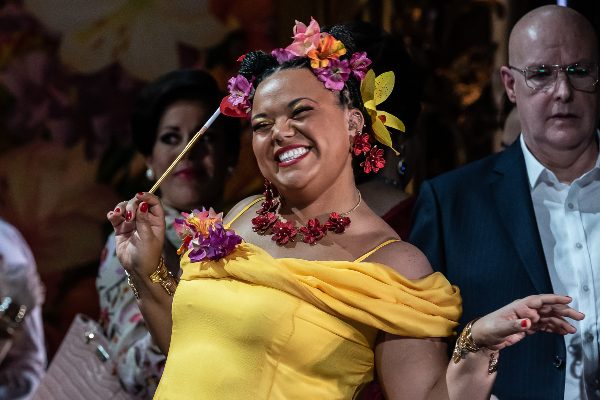
Molly Barker-Knowles as Countess Ceprano in 2022. Photography by Clive Barda
Reinterpreting the work in this way has, Femi hopes other benefits too, ‘the ultimate victory for us will be the acknowledgement that the arts belong to everyone, regardless of class, creed or colour. As a Black person, I would love to continue to change perspectives through opera, reconditioning expectations and consciousness. Rigoletto is certainly not the only story in the operatic canon which possesses universal themes. We must approach all the stories we tell with a bold and free instinct, to trust the storyteller and the players, regardless of colour. It’s important to me to push the boundaries of tradition and tell the story of Rigoletto in such a way that my siblings in Lagos, friends in Leeds, and young people everywhere, can embrace its truths’
Words taken from an interview between Femi Elufowoju jr and Stuart Leeks in 2022.
Rigoletto opens in Leeds on Sunday 18 October before touring to Newcastle, Salford and Nottingham throughout November.

