Everything you need to know about Mozart’s dark comedy Don Giovanni…

What is the story?

Don Giovanni is based on the legend of famous serial seducer Don Juan.

Time is running out for notorious libertine Don Giovanni, but he doesn’t know that yet. For him, it’s just another day at the office – breaking into the bedroom of noblewoman Donna Anna, assaulting her, murdering her father, and then, on stumbling across a wedding party, trying it on with the bride Zerlina and then beating up her fiancé Masetto.

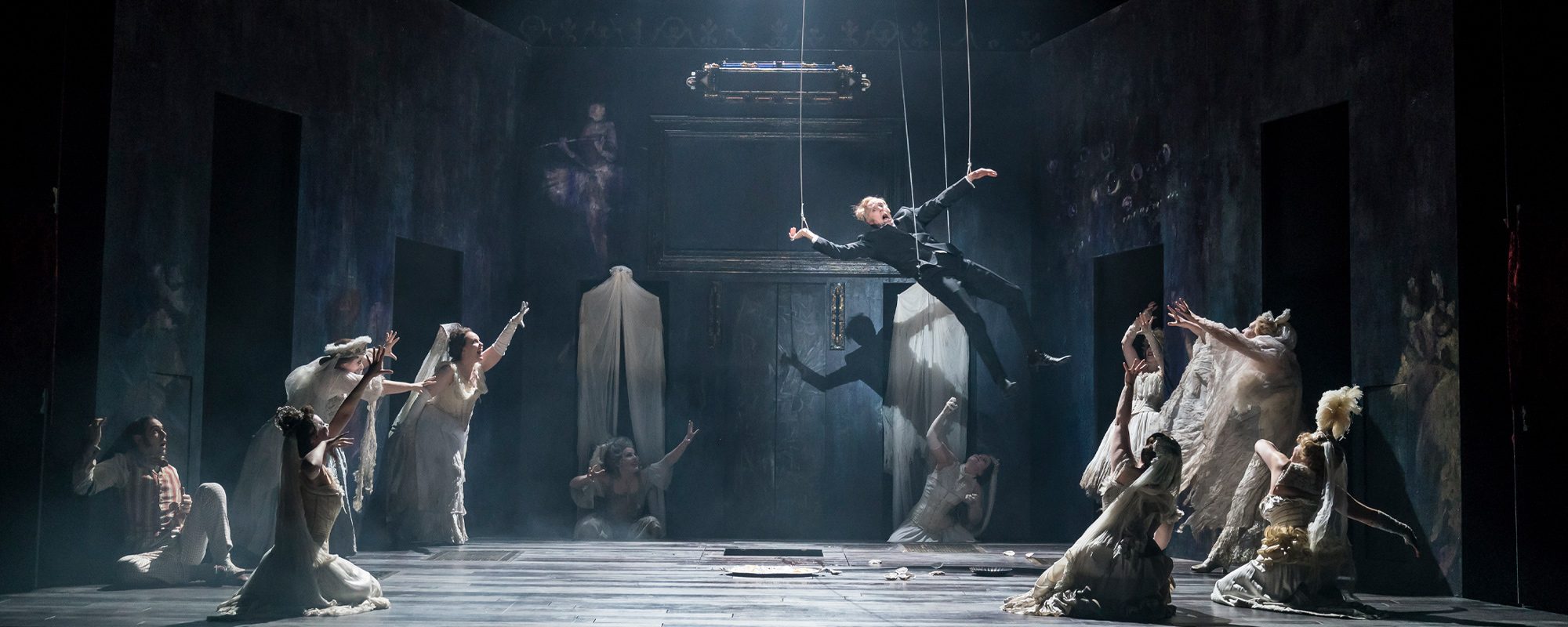
But the Don’s misdeeds are starting to catch up with him. Angry ex-lover Donna Elvira is on his trail, Donna Anna and her fiancé have sworn vengeance, Masetto and his friends want Zerlina back, and on top of that, an intervention from beyond the grave comes when the statue of the man he murdered – along with the ghosts of his former victims – come to dinner…
Read full synopsis

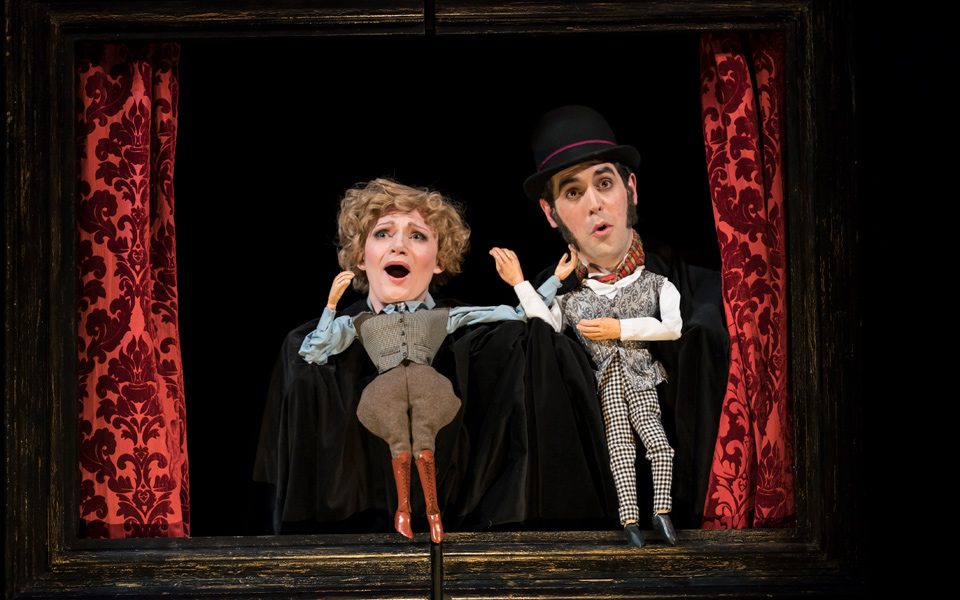
Elizabeth Atherton as Donna Elvira and John Savournin as Leporello in Don Giovanni, 2018 © Bill Cooper

Who are the characters?

The nobility
Don Giovanni (baritone)
Donna Anna — a victim of the Don (soprano)
Don Ottavio — her fiancé (tenor)
Il Commandatore — Donna Anna’s father (bass)
Donna Elvira — the Don’s ex-lover (soprano)

The lower classes
Leporello — Don Giovanni’s servant and sidekick (bass-baritone)
Zerlina — a peasant girl (mezzo-soprano)
Masetto — her fiancé (baritone)

The Chorus also make an appearance as Masetto and Zerlina’s friends and wedding guests, and the spectral victims who appear as the Don nears his doom…

What is the music like?

As an opera of the classical period, Don Giovanni has arias (solos), duets, and ensembles of soaring beauty, linked by recitative — which is where singers adopt the rhythms of speech accompanied by a continuo (such as harpsichord), and where the plot development happens.

However, this opera is unique right from the get-go. The first note of the overture is a clanging D minor chord which signal the gates of hell juddering open and announces Giovanni’s impending doom. Mozart brings this key back – along with the overture’s rhythmic chords – in the opera’s darkest moments, like when Il Commendatore reappears, to chilling effect.

Other highlights include Leporello’s ‘Catalogue Aria‘ in which he reads out the list of his master’s many victims (in Italy, 640, in Germany, 231, 100 in France, in Turkey, 91, but in Spain already 1003), and the Don’s Champagne Aria (called this due to the tradition of having him down champagne before singing and throw away the glass at the end)! At two minutes, it’s one of the shortest arias Mozart wrote, and it takes off at breakneck speed with a manic, tongue-twisting vocal line. Controversially, Don Giovanni never bears his soul to the audience (the traditional purpose of an aria), so we never get to find out how he really feels, but his character is revealed through the music – a lust for life and rarely pausing for thought.

What is this production like?

Director Alessandro Talevi’s production of Don Giovanni (new in 2012) channels the anarchic spirit of the original. It locates the action across different eras, with the title character cleverly time-travelling (think Doctor Who) between the starched Victorian mourning dress of Donna Anna and Don Ottavio and the 1950s rock’n’roll vibes of Zerlina and Masetto’s wedding party – so there’s a real mix of costumes!

The set simply provides a forum for the drama, which is “really all about people’s personalities and interaction” (Set and Costume Designer Madeleine Boyd), and some scenes are staged Punch and Judy style within a puppet show booth, leading us to wonder who is pulling the characters’ strings…

See photos

Who was the composer?

Don Giovanni was written by Wolfgang Amadeus Mozart (1756-1791), with a libretto by Lorenzo Da Ponte, with whom Mozart also collaborated on smash hits The Marriage of Figaro and Così fan tutte.
The legend of Don Juan was chosen as a topic with mass popular appeal (it often featured in street theatre of the day). In fact, a one-act opera on the subject already existed, so Da Ponte, who was pressed for time, borrowed some elements of this libretto and added new scenes of his own.

The opera was supposed to premiere for a royal visit to Prague on 14 October 1787, but wasn’t ready in time. The score was completed on 28 October for a re-scheduled 29 October premiere – Mozart having worked through the night to finish the overture (the last part to be written) before the dress rehearsal. It is said that the ink was still wet on the manuscript paper as the orchestra were handed their parts! Thankfully it went down a treat with audiences and critics, and is still one of the top 10 most frequently performed operas today.

Posthumous painting of Wolfgang Amadeus Mozart by Barbara Krafft, 1819

Did you know?

— Towards the end of the opera, the Don is given some musical entertainment – so the orchestra plays him some popular tunes of the day, including ‘Non più andrai’ from Mozart’s own The Marriage of Figaro!  Figaro had been a huge hit in Prague the previous winter, so Leporello complains that he is sick of hearing the aria everywhere, in a moment of witty self-parody from the composer.

— Mozart and Da Ponte reportedly lived across the street from each other in Prague for a time while working on Don Giovanni, and could be heard yelling back and forth through their open windows!

— The characters of Leporello and Don Giovanni are often seen as two versions of a the same person differentiated only by social class – in some stagings, they are even cast as lookalikes! In our production, they resemble a music hall double act with echoes of Laurel and Hardy, or Jeeves and Wooster.

— Don Giovanni features in Guy Ritchie’s Sherlock Holmes: A Game of Shadows (2011) starring Robert Downey Jr. – as Professor Moriarty watches the opera’s dramatic final scene from a box at the Paris Opera House, Sherlock tracks and deduces his movements backstage…

Don Giovanni is approximately 3 hours 15 minutes (including one 20-minute interval) and is sung in Italian with English titles.

Book now

×
Close

Search our site