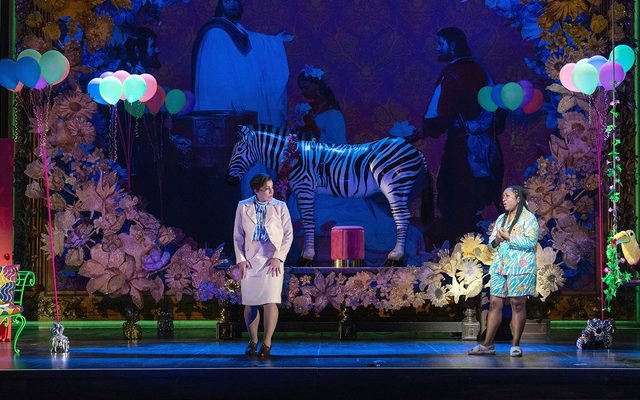
Everything you need to know about Tchaikovsky’s Eugene Onegin in one place — right here!

What is the story?

Eugene Onegin is an opera about timing: who speaks, who hesitates and what happens when love arrives before we are ready for it. The story is based on the 1833 verse novel by Alexander Pushkin.

Tatyana, a thoughtful and imaginative young woman, lives with her mother and sister Olga in the countryside. When Olga’s fiancée Lensky visits with a sophisticated friend from the city – enter Eugene Onegin – Tatyana is immediately captivated. She writes Onegin an extraordinary letter declaring her love, but he doesn’t feel the same and coolly rejects her. 

Later on at a party in Tatyana’s honour, Onegin begins to flirt with Olga (Lensky’s bride-to-be!) Fuelled by rage and jealousy, Lensky challenges Onegin to a duel with consequences neither man can undo.

Years later, Onegin meets Tatyana again in St Petersburg, where she’s now married to Prince Gremin and is greatly admired. This time, it’s Onegin who falls desperately in love and Tatyana must decide what, if anything, remains possible between them…
Read full synopsis

Who are the characters?

Tatyana — a young, passionate woman (soprano)
Eugene Onegin — a dashing man of the world (baritone)
Lensky — a romantic poet, Olga’s fiancé and Onegin’s best friend (tenor)
Olga — Tatyana’s lively sister, engaged to Lensky (mezzo-soprano)

There’s also…

Larina — Tatyana and Olga’s devoted mother (mezzo-soprano)
Filipyevna — Tatyana and Olga’s caring nanny (mezzo-soprano)
Prince Gremin — a noble general who marries Tatyana (bass)
Triquet — the girls’ French tutor (tenor)
Zaretsky — a local landowner and friend of Lenksy (bass)

Our Chorus also play a key role in setting the scene and reflecting the changing attitudes of society as the production progresses, and even feature in various group dance scenes!

What is the music like?

Eugene Onegin is Tchaikovsky’s best-loved opera and features sweeping melody lines and lush, colourful orchestration, typical of the Romantic period, to paint a picture of the story through music.

Tchaikovsky uses the orchestra like another cast member to tell the audience what the characters themselves cannot, revealing feelings from their private emotional worlds. He also gives characters their own musical ideas which crop up throughout the opera. For example, we open with Tatyana’s dreamy, yearning theme which is then further developed in her Letter aria, where restless woodwind mimic nervous butterflies and impassioned strings surge as her feelings for Onegin grow stronger. We hear the motif again in Act III, but this time from Onegin. The tables have turned and he is now the one overwhelmed with desire for Tatyana, as he weaves her tune into his own love song.

The music also incorporates dances, folk-style melodies and dotted rhythms to reflect the opera’s rural setting.

This production will be sung in the original Russian, with English surtitles on screen.


What is this production like?

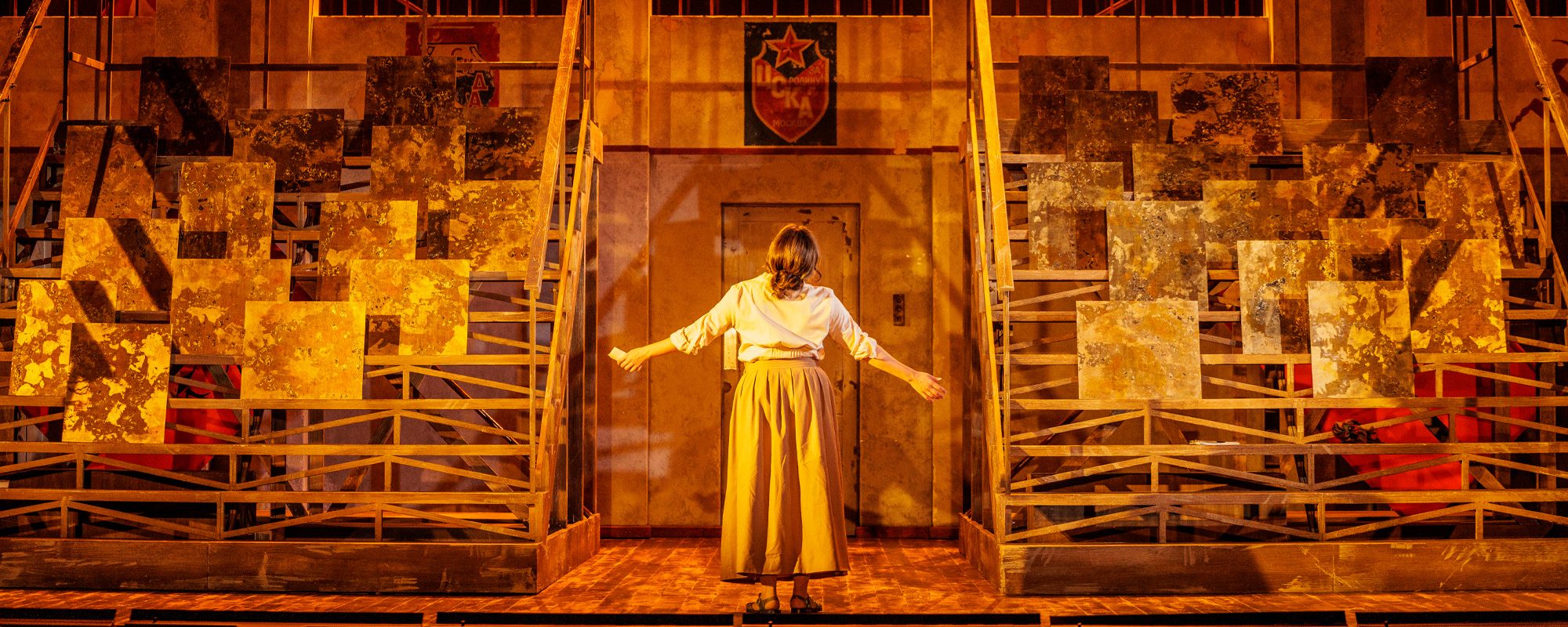
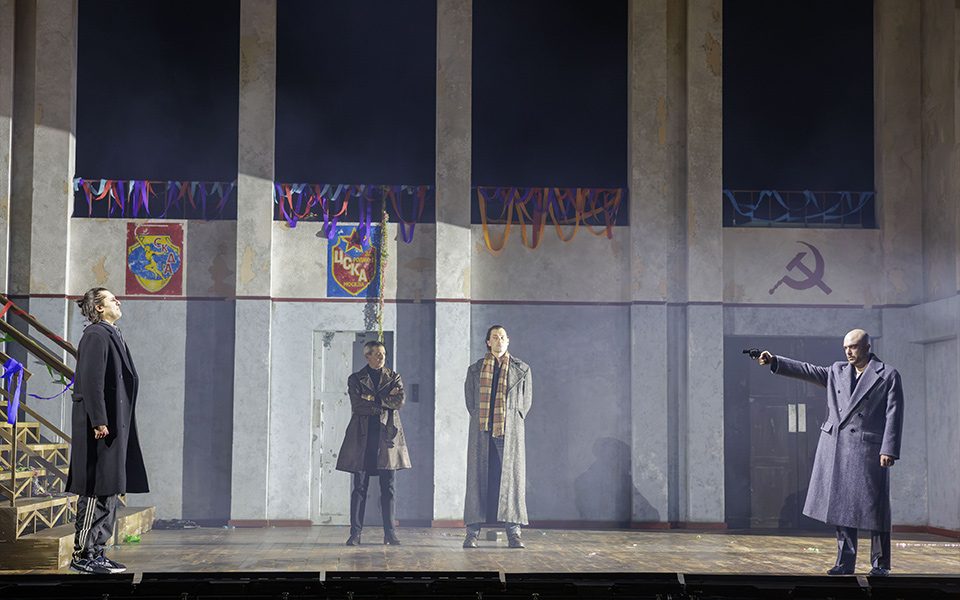
The brand-new production from director Patrick Nolan relocates Eugene Onegin to Russia in the years before and after Perestroika, allowing the private upheavals of Pushkin’s characters to unfold alongside the transformation of Soviet society.

Leslie Travers’ design centres the action in a Soviet gymnasium that serves in turn as rehearsal room, party venue and ballroom. The setting frames a carefully staged image of collective aspiration which, as the opera progresses, fractures and gives way to private wealth and a new oligarch elite.

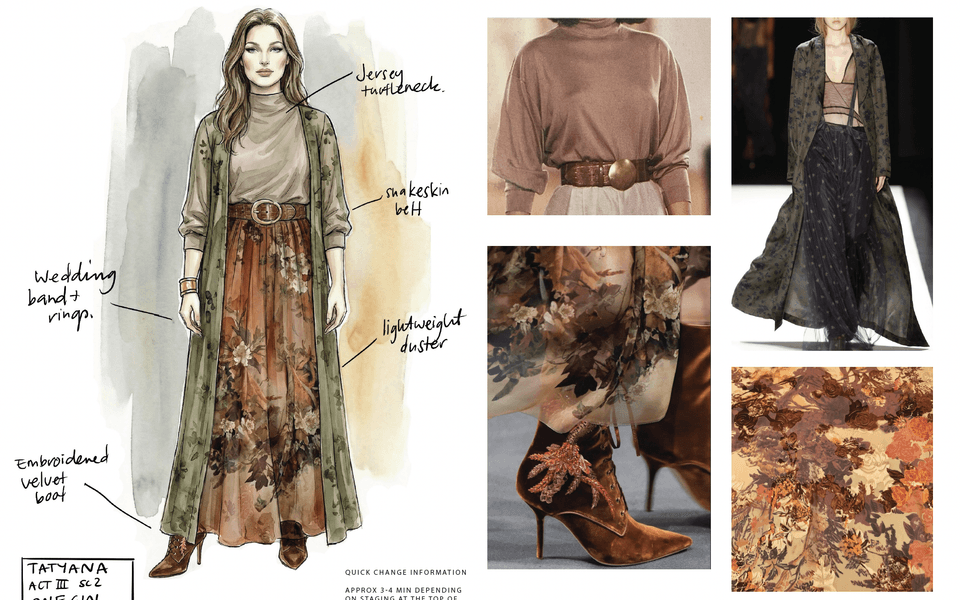
Elizabeth Gadsby‘s beautifully detailed costumes trace the same journey, from cotton and floral prints through tracksuits to the fur coats of the newly rich.

Costume design for Tatyana in Act 3 Scene 2 by Elizabeth Gadsby

Who was the composer?

Eugene Onegin was written by Pyotr Ilyich Tchaikovsky (1840 – 1893) and premiered in 1879.

Although best known now for his ballets, including Swan Lake, Sleeping Beauty and The Nutcracker, Tchaikovksy also wrote ten operas in his lifetime, Eugene Onegin being the most popular. His signature soaring melody lines go hand in hand with the drama you’d expect from opera, with orchestra, singers and staging all coming together to create an emotionally charged theatre experience.

Tchaikovksy actually perferred the term ‘lyric scenes’ to describe Eugene Onegin rather than opera, as he wanted the work to be an intimate reflection of the choices ordinary people make, and the paths their lives go down as a result.

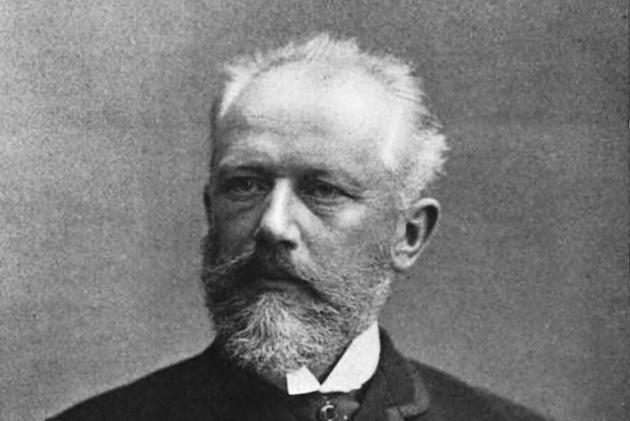
Pyotr Ilyich Tchaikovsky in 1888, taken by Émile Reutlinger

A little history

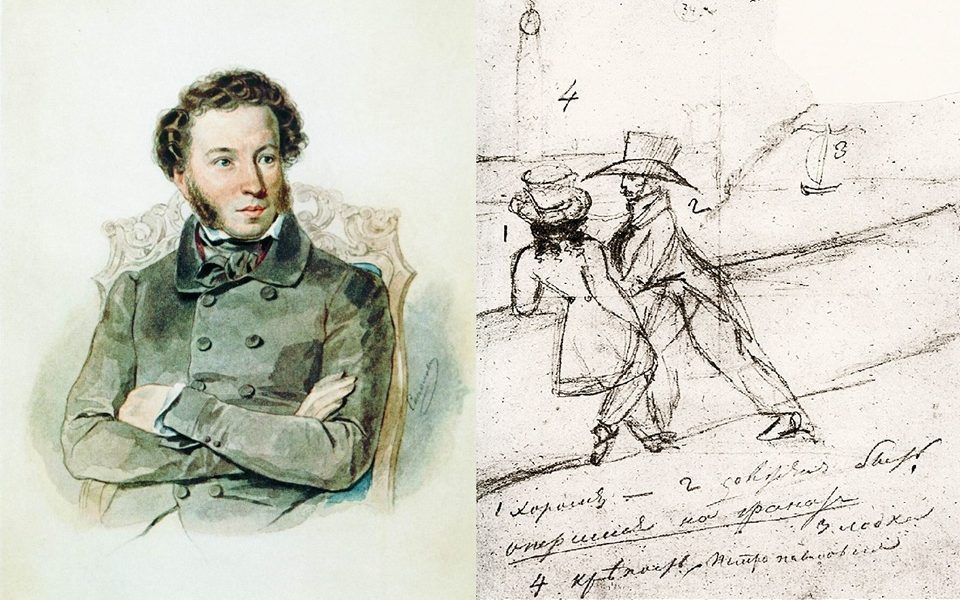
Pushkin’s original story Eugene Onegin: A Novel in Verse was written as a series of poems, making it great source material for interpretations across multiple art forms, from opera and ballet to film. Pushkin himself (literally!) drew inspiration from his characters and even sketched a self-portrait with the fictional Onegin in the margins of his 1824 manuscript.

Whilst Tchaikovsky was writing the opera, he coincidentally received a love letter of his own from former student Antonina Miliukova. Although they hardly knew each other, the two were soon married, but their relationship was disastrous. When they split only a few months later, Tchaikovsky channelled his emotions into finishing Eugene Onegin. He resonated with the bittersweet themes of regret, lost love and irreversible choices our characters face, and wrote the majority of the libretto using Pushkin’s original text.

Alexander Pushkin by P. Solokov (1836) alongside a self-portrait of Pushkin with Onegin at the bank of Neva river (1824)

Did you know?

  • Eugene Onegin was so popular that it was performed over 100 times in St Petersburg in the decade following the opera’s first performance.
  • Actor Ralph Fiennes starred as Onegin in the 1999 film adaptation and recently directed the opera at Opéra national de Paris in January 2026 – his opera directing debut!
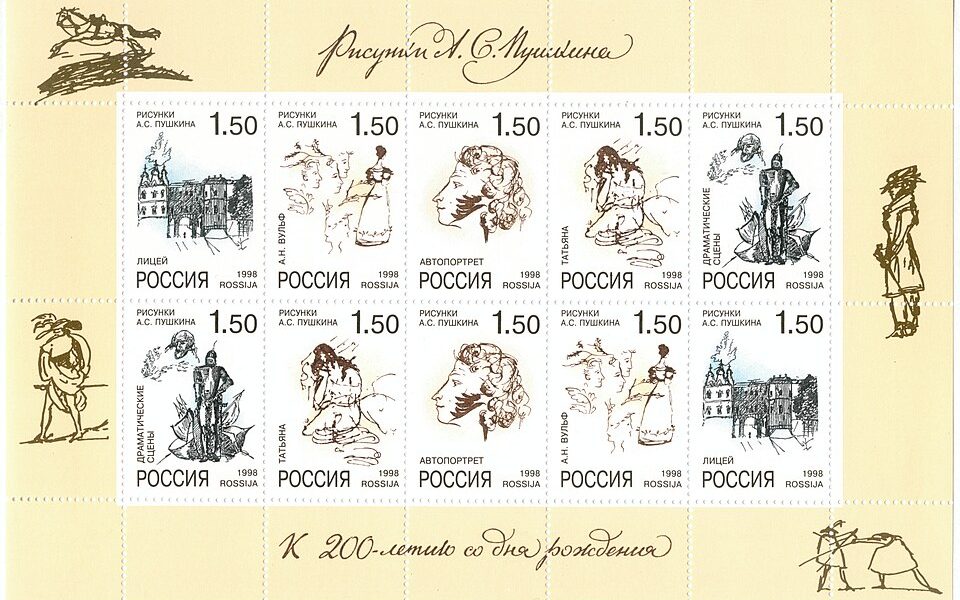
  • In 1998, Pushkin’s Onegin drawings were turned into postage stamps to commemorate the 200th anniversary of his birth.
  • Tchaikovsky also wrote two other operas based on Pushkin’s work: The Queen of Spades (which Opera North performed in 2011), and Mazeppa.

A scan of 10 postage stamps from 1998 featuring Pushkin's Onegin pen drawings

Book tickets

Eugene Onegin tours the North October – November 2026.

Find out more

×
Close

Search our site