You’ll be able to book your 2026-27 opera tickets soon…
From 31 March: book an Opera Package.
From 14 May: book your tickets for individual shows.
Become a Friend today to unlock your priority booking from 25 March.

“Contemporary opera at its most compelling” — The Times
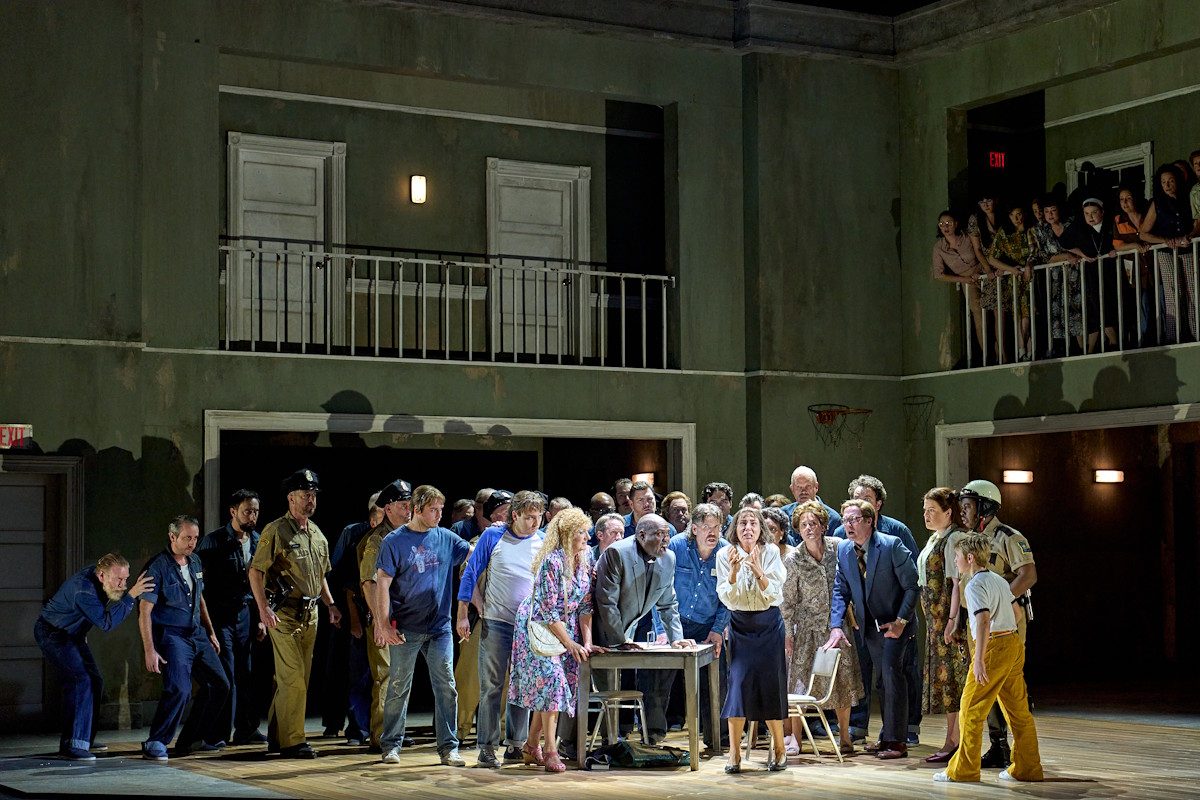
Based on the memoir by Sister Helen Prejean, Dead Man Walking is one of the most widely acclaimed and frequently performed operas of the past 25 years.
Imprisoned for a horrific double murder, Joseph De Rocher asks Sister Helen for spiritual guidance as he awaits execution on Death Row. Despite the misgivings of the sisters of her mission and members of the prison staff, Helen agrees to his request. Caught between the pain and grief of De Rocher’s family and the families of his victims, Helen attempts to lead De Rocher to a confession of his terrible crimes, whatever the emotional cost to herself.
With a libretto by acclaimed playwright Terrence McNally set to Jake Heggie’s deeply affecting score, Dead Man Walking is an intensely powerful work that explores the limits of compassion, faith and forgiveness.
This is a co-production with English National Opera and Finnish National Opera.
Running time
Approximately 3 hours
Language
Sung in English with English subtitles
Buy your programme in advance
Digital (£4) or printed (£6 + £2.50 postage)
Age guidance and content warning
18+ – Contains adult themes including depictions of rape, murder, violence, execution by lethal injection and intense grief
Save on your booking
£20 new to opera tickets
£15 for Under 30s members (free in Leeds if 16-20)
£10 child tickets
Discounts for groups and schools
Multibuy packages
*Prices and booking fees vary per venue
From 31 March: book an Opera Package.
From 14 May: book your tickets for individual shows.
Become a Friend today to unlock your priority booking from 25 March.
Joseph and Anthony De Rocher brutally rape a girl and kill her and her boyfriend.
New Orleans:
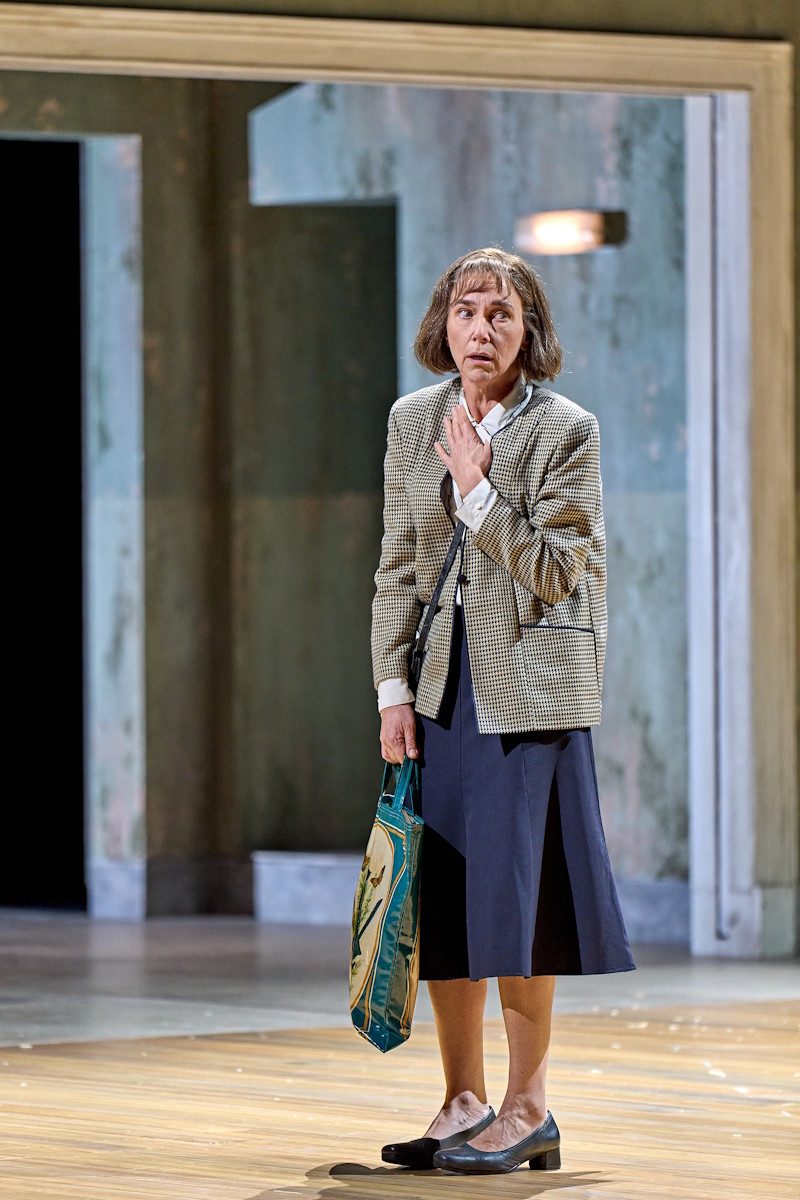
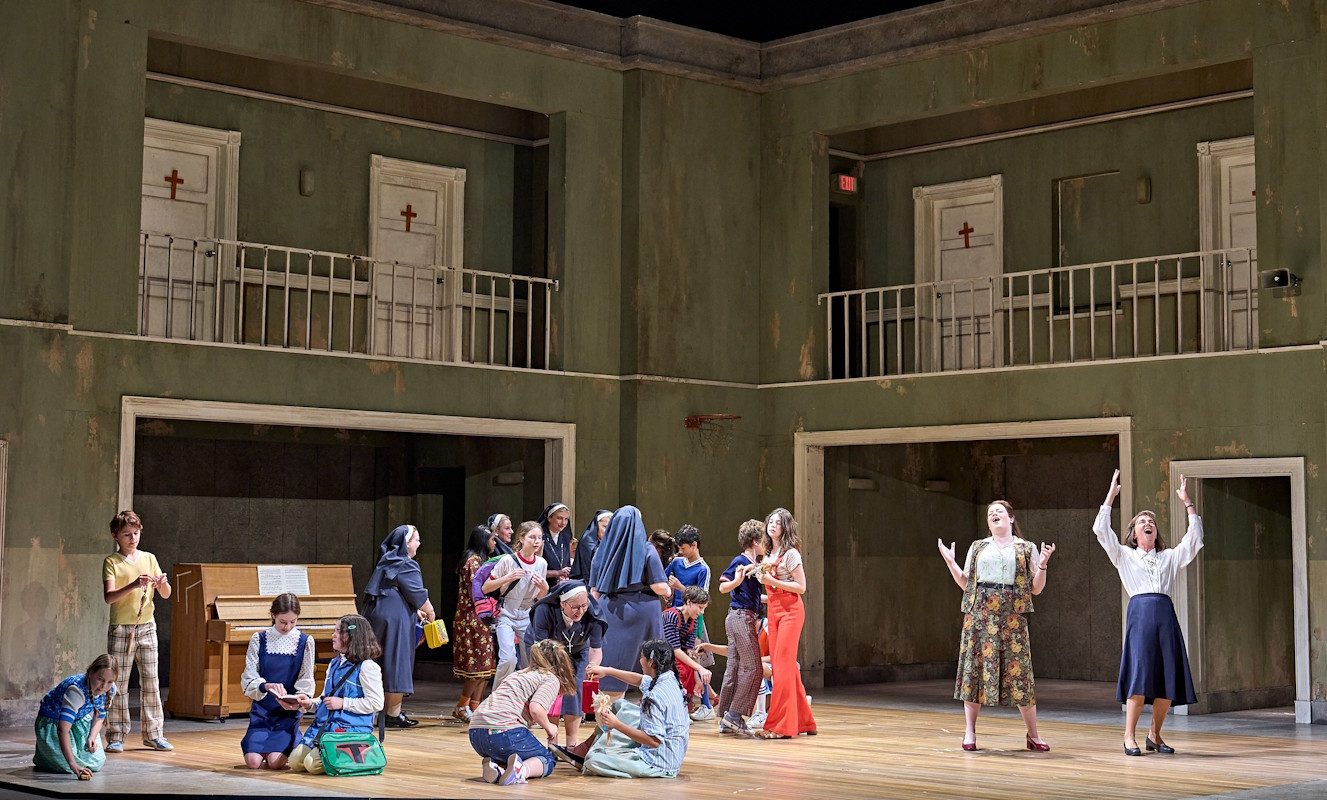
Sister Helen and Sister Rose teach a hymn to a group of children. Sister Helen is distracted as she thinks about her plan to visit Angola State Penitentiary. She has been writing to a death row inmate named Joseph De Rocher, who has asked her to visit.
Against Rose’s advice, Sister Helen makes the long drive to Angola and ponders the momentous step she is taking. A motorcycle cop stops her for speeding, but lets her off with a warning, asking her to pray for his sick mother. As she resumes her journey, she prays for guidance.
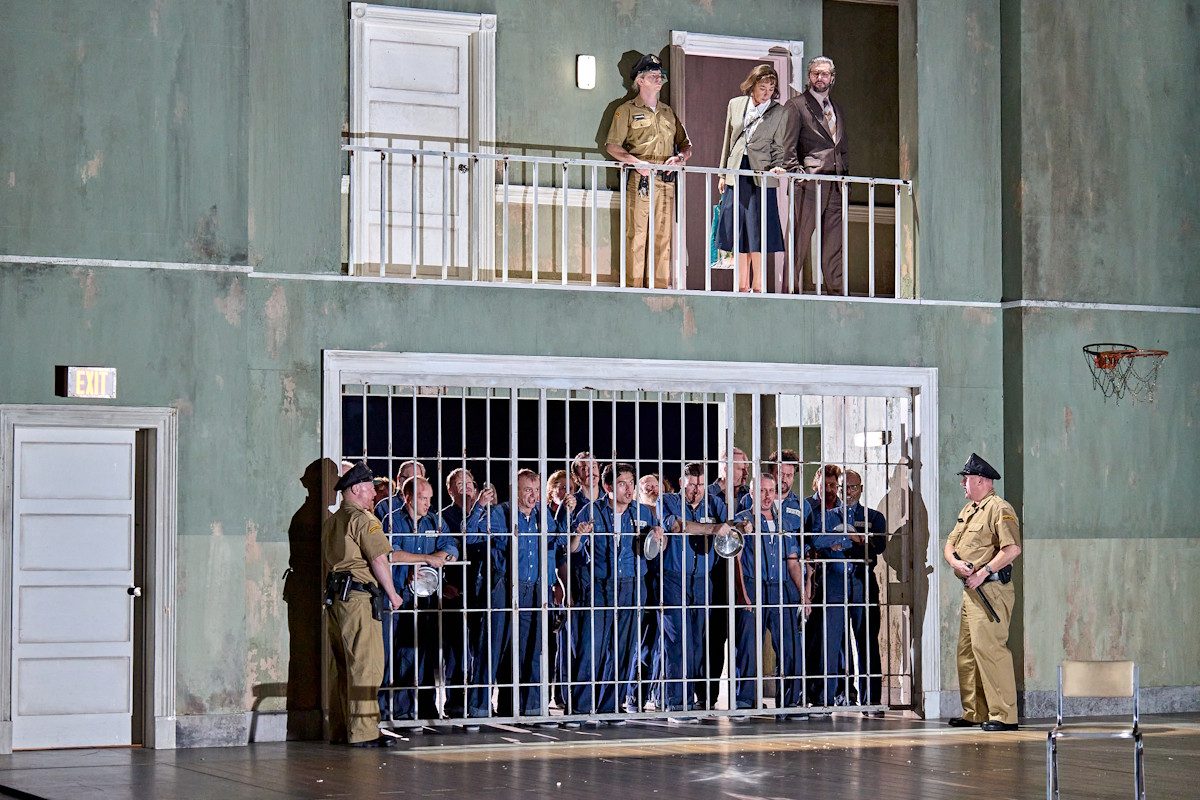
When she arrives, Sister Helen is greeted by the prison chaplain, Father Grenville. On the way to his office, they see the inmates held on death row. Sister Helen and Father Grenville then have a tense meeting in which the chaplain angrily warns her that she is wasting her time, as Joseph is beyond anyone’s help. The prison warden arrives and tells her Joseph is likely to ask her to become his spiritual advisor to help prepare him for his execution. As she walks to the death row section of the prison, Sister Helen is taunted by the inmates.
Joseph and Sister Helen have an awkward first meeting. Hiding his fear with bravado, he tests her tolerance by recalling the pleasures he has known with women. Sister Helen calls his bluff, and Joseph admits his fear. He requests she be his spiritual advisor, and both acknowledge they “can’t do it alone”. Joseph asks her to accompany his mother to the Pardon Board hearing, and Sister Helen agrees.
In a courtroom setting, the frightened Mrs De Rocher does her best to plead for her son’s life to the pardon board: she is a woman faced with enormous hostility. During her testimony, Owen Hart, the father of the murdered teenage girl, explodes with anger and recounts the horrific details of his daughter’s murder. In anguish, Joseph’s mother responds that another killing cannot undo what has been done.
After the hearing, Joseph’s family and the murder victims’ families wait for a verdict outside the courtroom. Sister Helen introduces herself to the parents and they express their grief at never seeing their children again. News arrives that the appeal has been turned down: Joseph will be executed.
In the visiting room, Sister Helen tells Joseph that an appeal has been made to the governor. Angered by his selfishness, she urges him to acknowledge his guilt and seek forgiveness, but he sees no hope and blames his brother for the murders. The warden appears suddenly and insists she leave.
Sister Helen has had no time to eat and becomes faint from hunger, stress and exhaustion. As she looks for change at a vending machine, a jumble of conflicting voices from those she has met connected to the case invade her mind. The warden tells her the governor has turned down the appeal: ‘Joseph De Rocher is a dead man’. The voices in her head grow louder, and Sister Helen faints.
Joseph is exercising in his cell when a guard comes to tell him his execution date has been set: August 4, midnight. Alone, Joseph voices feelings about his impending death, Sister Helen and his murder victims.
Sister Helen feels haunted by the murdered teenagers. Rose comforts her and helps her admit she still must find the strength to forgive Joseph herself.
On the night of Joseph’s execution, Sister Helen tells him about seeing Elvis Presley in person when she was a girl. Their shared love of Elvis opens a door between them and they laugh as friends. Once more, she urges Joseph to admit his guilt and find forgiveness. The warden announces that Joseph’s family has come to see him for the last time.
Joseph has a tearful farewell with his mother and two younger brothers. He begs his mother to forgive him, but she says she believes what he has always told her: that he is innocent and there is nothing to forgive. Mrs De Rocher seeks comfort in her recollections of Joseph’s innocent childhood. When he is led away, his mother falls apart, consoled by Sister Helen with assurances that there is good in her son and that God’s love has not denied him. Left alone, Sister Helen panics for a moment as she contemplates the harrowing task she faces that night.
The parents of the murder victims have arrived to witness the execution. They upbraid Sister Helen for siding with the murderer, rejecting her words of consolation. Only Owen Hart voices doubts about the value of the execution. Sister Helen offers him friendship and promises to visit.
After the guards prepare Joseph for execution, Sister Helen is alone with him one last time. In the few moments remaining, Sister Helen begs him to tell the truth. She reveals that she has visited the crime scene and asks him to relive that night. Reluctantly, Joseph tells her the whole story and, breaking down in sobs, admits his guilt. Sister Helen assures him that he is a son of God. She tells him she will be the face of love for him when he dies.
The warden calls out, ‘dead man walking’. As he escorts Joseph to the execution chamber, Father Grenville intones the Lord’s Prayer, echoed by the voices of inmates, nuns, guards and parents. Sister Helen remains close to Joseph, reading to him from the Bible. When they reach the chamber, she is barred from going any further. Joseph and Sister Helen exchange an emotional goodbye. She reminds him to look for her as she takes her place with the others in the viewing room. After being strapped to the execution table, Joseph asks the parents’ forgiveness.
In silence, with only his heartbeat audible, the lethal injection is administered. In his final moment, Joseph says to Sister Helen: ‘I love you.’ After his death, the witnesses leave and Helen is alone with Joseph. One last time, she sings her hymn: “He will gather us around.”
Courtesy of the Metropolitan Opera and Jake Heggie.

Sister Helen Prejean

Joseph De Rocher

Mrs Patrick De Rocher

Conductor

Director

Set Designer

Costume Designer

Lighting Designer

Choreographer

Associate Director
Book tickets to 3+ operas this season and save up to 15%. Enjoy benefits like flexible ticket exchange if your plans change and more…